Musa’s Great Adventure
Opening the door of God’s Kingdom to the Mankidias of India
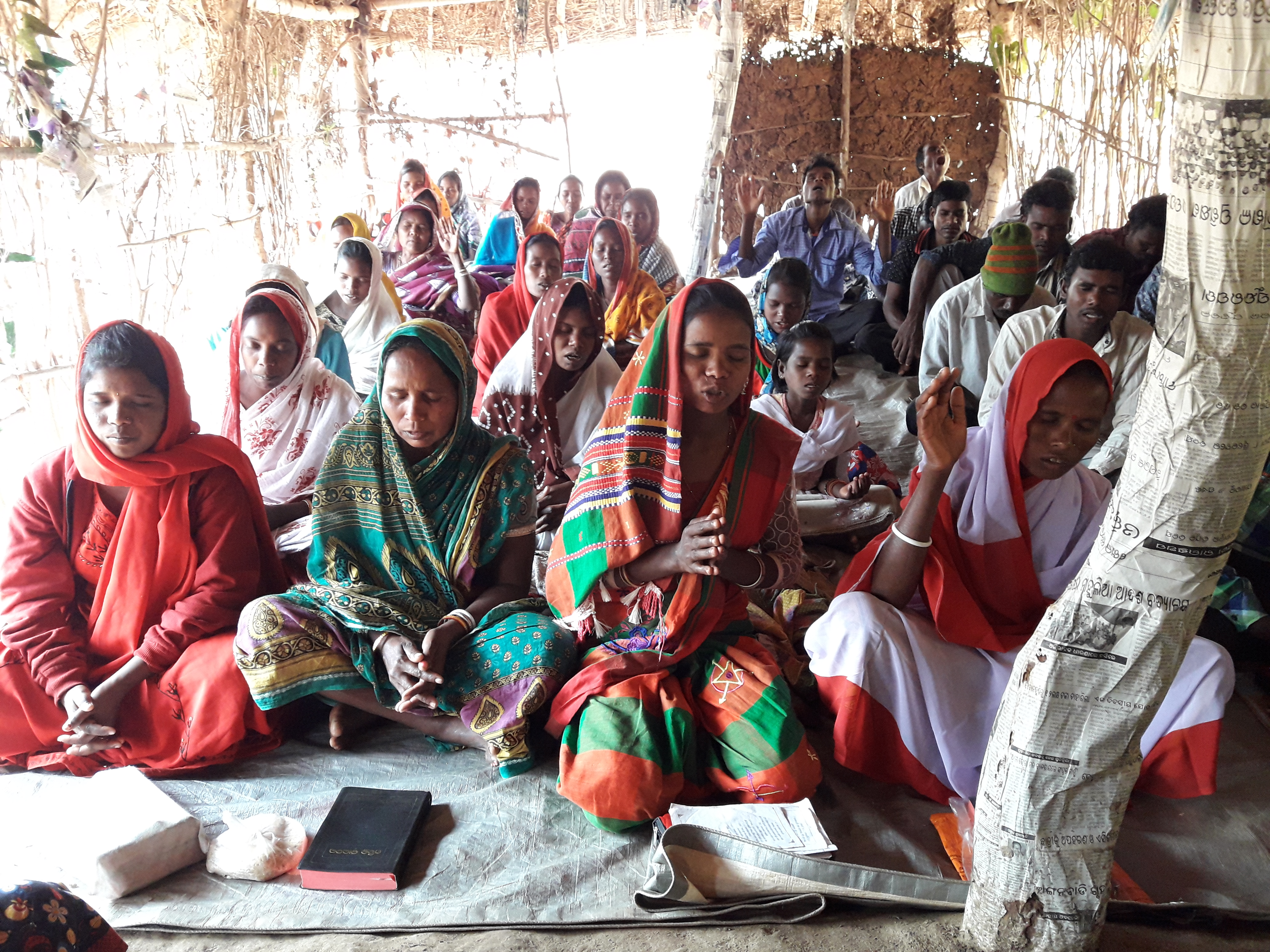 When Pastor D. B. Hrudaya of Orissa, India, first heard of the Mankidia people group, they were among the most nomadic and illiterate peoples of northern India. They were known as “monkey hunters” and forest dwellers. There were no believers in Christ among them. They worshiped evil forest spirits. Their culture was rampant with oppression and hopelessness. They could boast of no high school graduates, medical knowledge or social graces.
Two such examples were Arun Mankidia and his wife Salomi. They lived in a primitive hut made of branches in the remote Dengam jungle. They suffered with severe depression due to the influence of the evil spirits that they worshipped. They had to walk 25 miles through the jungle to sell the hand made rope that they wove from the forest vines at the nearest market. They were without God and without hope in the world.
 Into this picture, stepped a man named Musu Marandi. He is one of Pastor Hrudaya’s field staff. Hrudaya and his team had been praying for an opening among the Mankidia people for over 10 years but with no breakthrough. They had reached the point where some of Hrudaya’s workers had learned the Mankidia language. With some outside support, the ministry was able to send Musu into the jungle areas where they lived. Finally, on one of the weekly market days, Arun met Musu in the market. After a lengthy conversation where Musu shared the good news of Christ with him, Arun decided he wanted to know more about the wonderful person of Jesus.
Arun went home and shared what he had learned with Salomi. She had just miscarried a baby for the third time. The hopelessness of her married life was at its greatest height. But on that wonderful day she received new hope. The news of forgiveness and a new life in Christ was a revelation to her. God had begun His good work in her and Arun’s hearts.
Arun and Salomi visited Musu at his home. He fully explained the plan of salvation to them in their language. On that day, Musu led them to Jesus Christ. Their lives were forever changed. They immediately began sharing the news of Jesus with other Mankidias. A new work was born!
Not long thereafter, both Arun and Salomi came to Pastor Hrudaya’s training center in Balasore, Orissa, for Biblical training and church planting training. In 2014, they graduated and went back to work among their own communities. Starting in their own village and reaching out from there, they now have spread the Gospel into 13 villages. So far, about 2000 Mankidias have come to Christ. Today, they have developed a small outreach team focusing on reaching the remaining Mankidias for Christ.
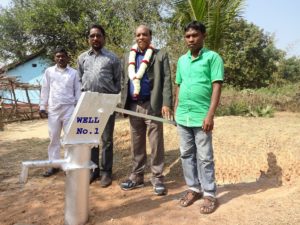
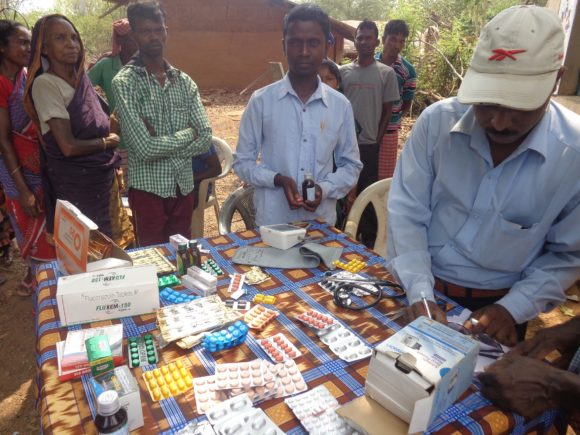
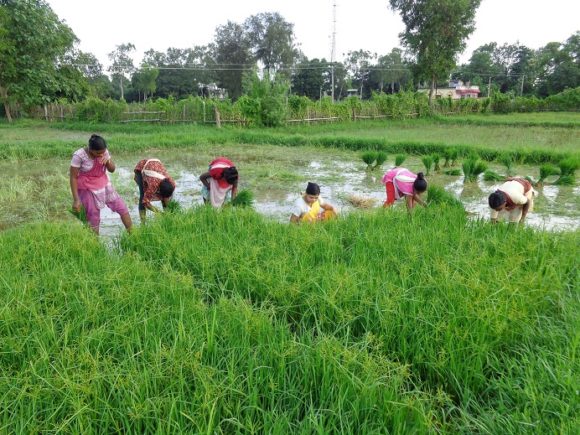
 Though funding has been very limited for this wonderful project, much has been done to raise the living conditions of the Mankidias. Efficient farming techniques have been introduced, land for growing crops has been provided to them, medical clinics have been held and literacy centers have been established. The first Christian Mankidia marriages have been celebrated. The Mankidia project, initiated in 2014 in order to introduce the Mankidias to the God who made them, loves them and died for them, has developed them in every way. The included pictures bear testimony to that reality.
But this is still just the beginning. With the provision of strategic funding, the project can touch many more lives.
Here is what is needed to bring the Mankidia work into fuller effectiveness:
1. The provision of regular support for 5 workers at $100 per month
2. Funding for four Medical Camps at $800 per camp
3. The establishment of literacy centers among the not yet reached villages of the Mankidias. These cost about $300 to set up and $150 a month to maintain.
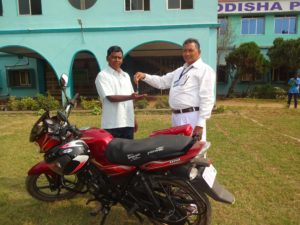
4. One motorbike at $1000 for a regional worker to travel among the villages.
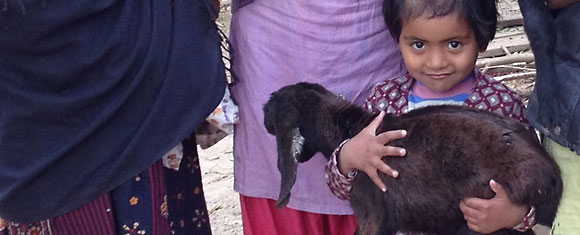
5. Establishment of a Mankidia Goat project. This effective project works as follows: A family is given 3 goats at a cost of $50. The family cares for the goats for two years in which time their small herd normally grows to 10. After that, the additional goats can be sold in the market. Past project experience shows this will provide an annual income of over $600 to the family. Pastor Hrudaya wants to start this project with 60 Mankidia families so is seeking $3000 to get it launched.
Will you help us provide new support for this fruitful work among the Mankidia people? There are many Arun’s and Salomi’s out there who will become wonderful ambassadors of the love of Christ to their fellow Mankidias.
With deep thanks,
Lance Thollander for HBI, Pastor Hrudaya and the Mankidia people
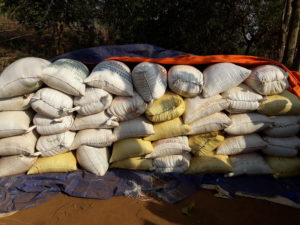 The rice harvest is over. This year 5800 pounds of rice was harvested. Six acres of new
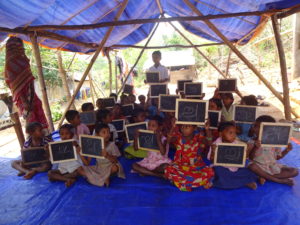 OFU’s Women’s Impact Network conducted Bible studies among the Mankidia ladies. It is encouraging to see how gladly the women participated. The Pre-school center is going on well. The number of children is growing steadily.
  Last year 3 medical camps were held and 600 patients were treated and given medicine.
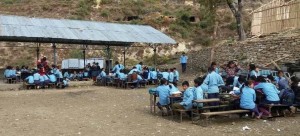 We have continued scholarship support for 18 school children. An additional 18 children received one time support at the beginning of the academic year. There are many more needy children because of the earthquake. Many of the mothers (single women) sobbed when they shared their stories of how we have helped. They shared the impact on their lives and the relief they experienced through the scholarship and support package their child received from our ministry support team, God’s Love for Orphans and Widows (GLOW). This picture shows children studying outside because their school building was destroyed.
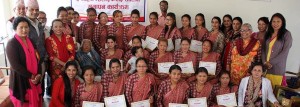 The fifth batch of 23 trainees graduated after completing six months advanced tailoring training on March 20th. Since the start of this program, 79 participants, many of them widows, have completed the tailoring training. Many graduates are ready to start their own tailoring shops but need funds to purchase a sewing machine. The picture above shows the tailoring graduates.
 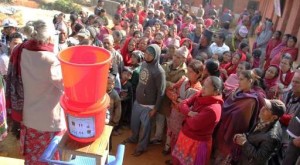 GLOW, in partnership with a local Christian organization, distributed around 360 plastic water pails with attached filters, which are simple to use and to keep clean. This will supply families living in remote villages with safe water, prevent gastrointestinal illness and reduce childhood mortality. Here is a water filter set being explained.
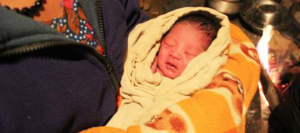 Here’s another testimony from a village that we visited. Pastor Palsang and some of our team walked into the village. The pastor’s neighbors’ wife was in labor and called the pastor to pray for her. He quickly rushed there and as he was praying, she delivered a daughter in front of them. They walked back to the church and told us what happened. We returned to the house with infant supplies. There the mother and the new child were sleeping in a dark corner of a hut they had built after the earthquake flattened their three level house. We learned that their two daughters died when the house fell and buried them during the earthquake. This newborn is their sixth child. This is a family of believers who attend the church in the village. They asked us to pray for them and thanked God for this new gift to their family, bringing them joy and healing of heart. It was good to be there to witness and celebrate life with them in the midst of all the pain and hardship they had been through.
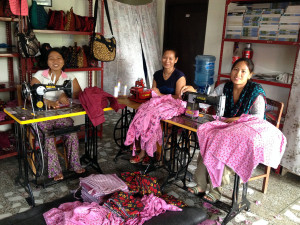 Our sewing and tailoring training has been extended to more districts. The local churches there promote and manage these projects. This brings local buy-in to the effort. The church sets up the center, installs the sewing machines and obtains government approval. The training is primarily for flood victims and those who do not have the skills to make a living. The cost is $2500 to set up each training center with the necessary machines. We are also working to provide filtered water for the 300 households.
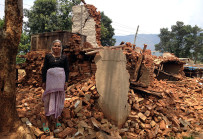
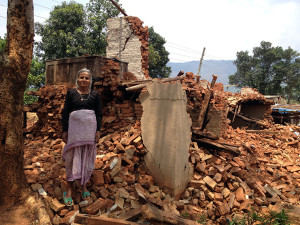 We recently received this report from our ministry partners in Nepal who are working in the quake areas. Your gifts are making a difference as GLOW is able to reach out to many through your help. Many hundreds of their church members like the woman shown here have lost homes in the devastating quakes. Even now ministry workers are trekking into difficult areas to bring aid, and are also reaching out to those in their immediate areas.
 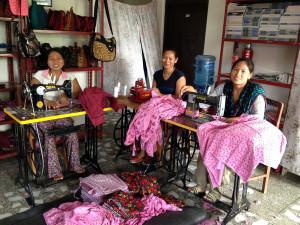 The women at GLOW (God’s Love for Orphans and Widows), shown here, are a few of those who have been working long hours to make clothing for those who have lost everything. These women are among the widows and single women who have been trained in GLOW’s sewing classes in part through help from Hope Builders. Most people in the quake areas lost everything they owned when their houses collapsed in the earthquake’s aftermath. After the earthquake GLOW immediately began providing emergency food aid, water and tarps that were used to put up tent like protective structures. You can see their gladness in the picture below as they received the tarps.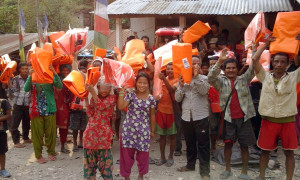
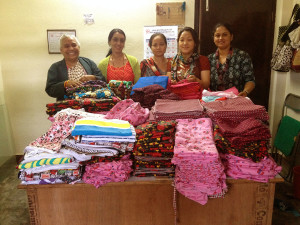 The short-term and long-term effects of the disaster are difficult to fully comprehend. Hundreds of thousands of families are without homes as the monsoon season looms, and the quakes and subsequent landslides and avalanches have undercut the country’s two primary sources of livelihood, agriculture and tourism. A leader of an indigenous ministry working in Dolakha District, where most of the casualties of the second earthquake occurred, said that 70,000 of the 75,000 houses there were destroyed. Another ministry leader said most survivors are living in the open air and need tents, food, water and medical assistance. Most aid that is being sent worldwide goes through government hands and is very slow to reach those most in need. That’s why we are so blessed to be able to work directly with Nepalis like Resham and Sita who can use sent funds to buy and prepare the kinds of goods that will bring relief to the hurting as well as love and comfort in the name of Christ. Clothing for a woman costs $10 and clothing for a child costs $5 to produce. Sita is pictured, on the left, with some of the GLOW center women and a sample of the clothes they have produced.